ENERGY
Shake, whisk or blend
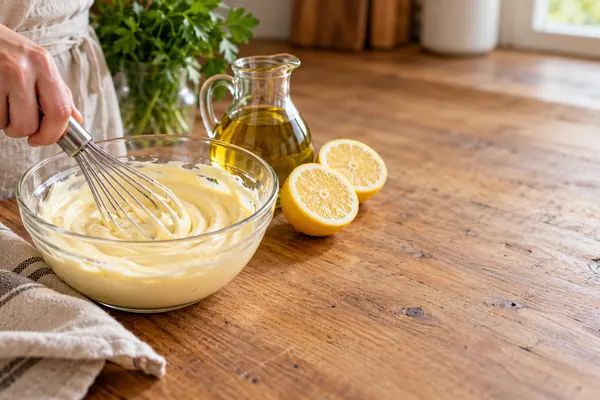
Common emulsions do not form on their own. They need energy, from shaking, stirring or blending, to break one liquid into droplets inside the other.
Compare the mixes doodlemixers
00THE KITCHEN SCIENCE
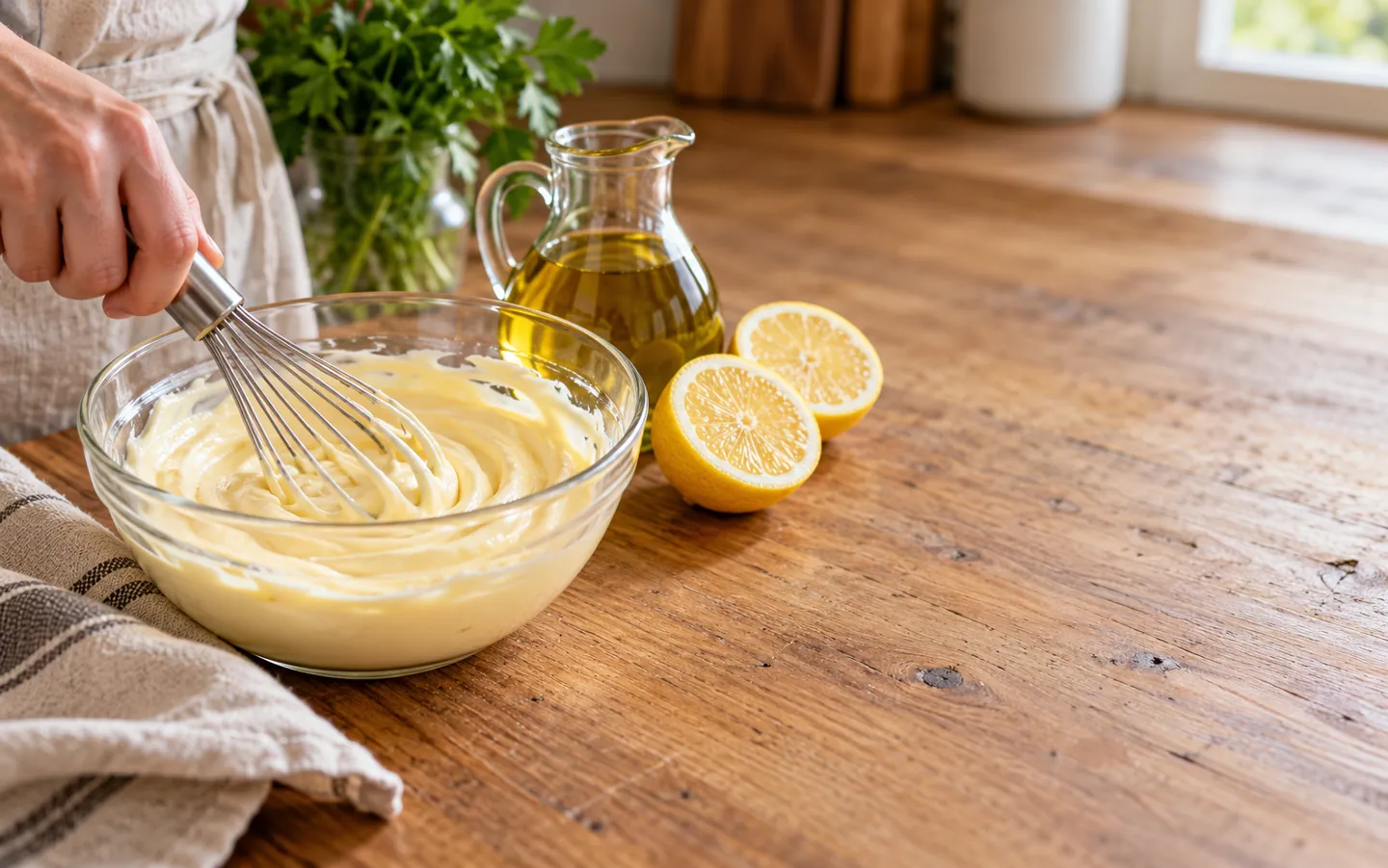
Oil and water do not mix. Except when they do.
Whisk them hard and the oil breaks into tiny droplets. Add an emulsifier such as egg yolk and those droplets stay apart. That is the whole trick behind mayonnaise, creamy dressings and even milk.
Compare the mixes01Principles
02THE SHORT ANSWER
An emulsion is one liquid spread through another as droplets.
Keeping it that way takes an emulsifier.
ENERGY
Common emulsions do not form on their own. They need energy, from shaking, stirring or blending, to break one liquid into droplets inside the other.
Compare the mixesEMULSIFIERS
Lecithin from egg yolk has a part that binds to water and a part that binds to fat, so it coats each oil droplet and stops them joining back up.
See the numbersMETHOD
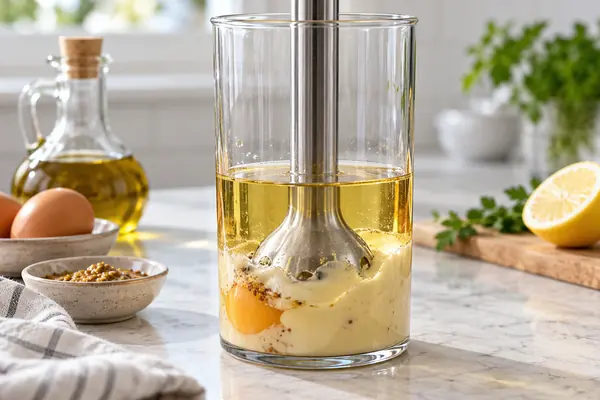
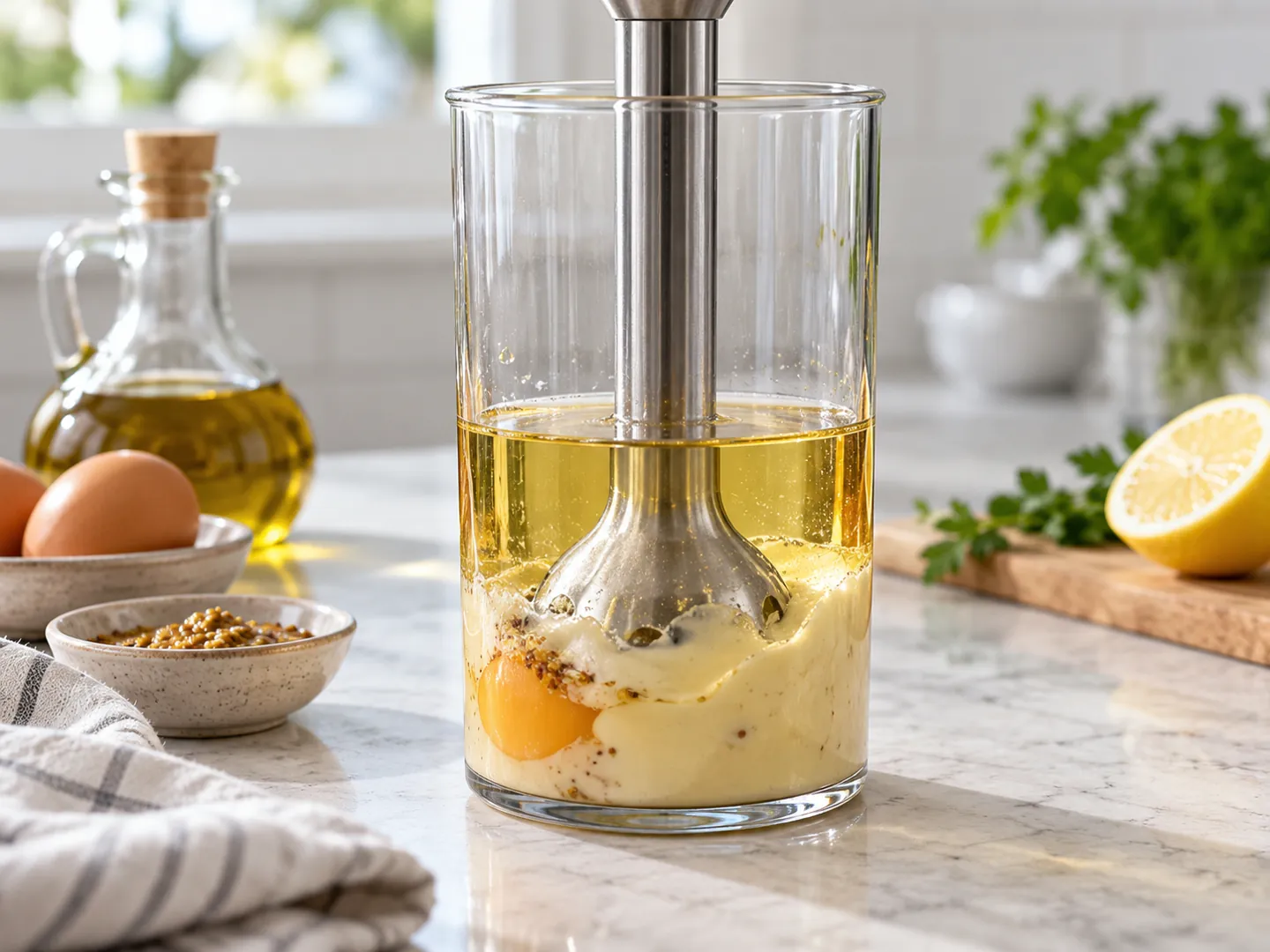
A University of Lodz chemist suggests holding the blender still at the bottom for the first few seconds, so a stable emulsion forms before more oil is drawn in.
How to do it03HOW LONG WILL IT HOLD?
Pick a kitchen mix to see what holds it together. The bar shows how stable the emulsion is.
Stability depends on the emulsifier, the droplet size and the recipe.
04TWO NUMBERS WORTH KNOWING
One figure on how much oil mayonnaise holds,
one on why it is acidic.
65%
Minimum oil in mayonnaise, by weight
The US federal standard of identity says mayonnaise must contain not less than 65 percent vegetable oil by weight. All that oil stays smooth because it is held as droplets.
FOOD STANDARD · US FDA
3.5–4.5 pH
Typical pH of mayonnaise
Lemon juice or vinegar makes mayonnaise acidic. The acid helps yolk proteins stabilise the droplets and limits the growth of many microorganisms.
ACIDITY · UNIVERSITY OF LODZ
Low pH limits many microorganisms but does not make raw egg risk-free: UK guidance still says to choose eggs carefully for vulnerable people.
05FOUR STEPS TO A STEADY MIX
These come from a university chemist's method for blender mayonnaise and from UK food safety guidance on raw eggs.
Correct proportions, the temperature of the ingredients and not rushing all matter for homemade mayonnaise.
Hold a stick blender still at the bottom of a tall jar for a few seconds, then lift slowly as the oil is drawn in.
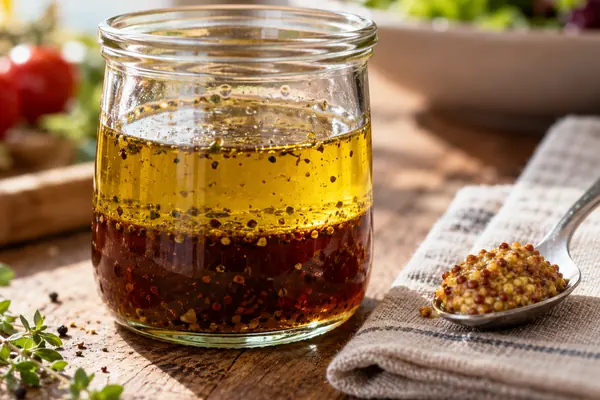
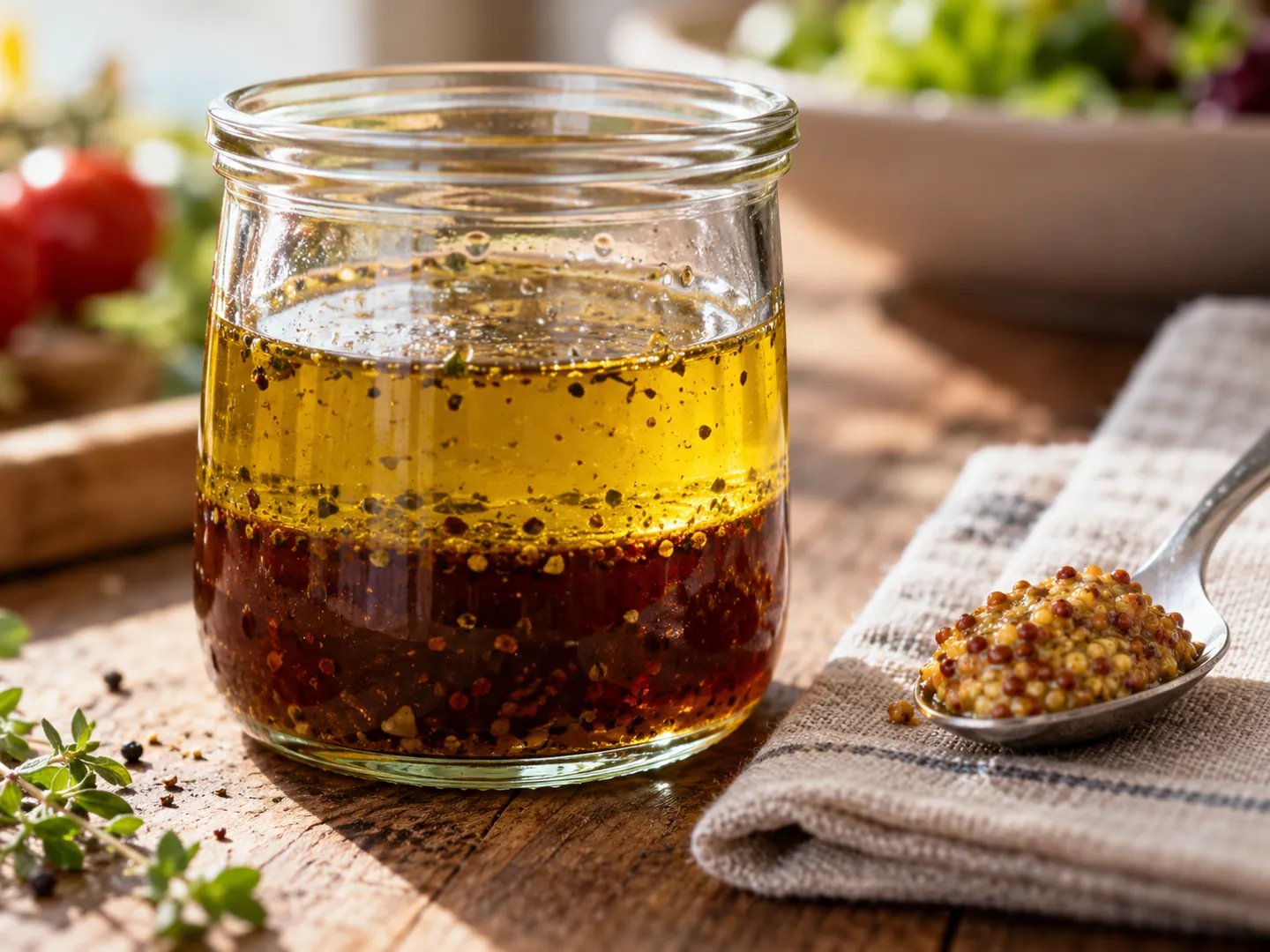
Mustard contains natural emulsifiers that help oil and vinegar stay mixed for longer.
For young children, pregnant people, older adults or people with health conditions, use British Lion or Laid in Britain eggs, or pasteurised egg.
06RAW EGGS
UK guidance says some eggs can carry Salmonella, which can cause very serious illness in young children, pregnant people, older adults and those with an underlying health condition.
The FSA says eggs from the British Lion and Laid in Britain schemes present a very low risk and can be eaten raw or lightly cooked by these groups. It also notes that shop-bought mayonnaise is often made with pasteurised egg.
07Questions
They are immiscible liquids. An emulsion of the two is usually unstable and tends to return to separate layers, as a plain vinaigrette does unless it is shaken almost continuously.
It provides lecithin, which has one part that binds well with water and another that binds with fat. It surrounds the oil droplets and stops them recombining.
Mustard is a food emulsifier: chemicals in the mucilage around the seed hull help stabilise the mix of oil and vinegar.
Yes. Plant-based versions use other stabilisers such as aquafaba, the liquid left from cooking chickpeas, or plant milks or tofu. The chemistry is the same.
UK guidance says people in good health are unlikely to get food poisoning from raw UK hen eggs from Salmonella-vaccinated flocks. For vulnerable groups, use British Lion or Laid in Britain eggs, or pasteurised egg.
08Sources
ABOUT THIS NAME
doodlemixers.com is part of the DoodleSale portfolio. It isn't in an auction right now, but you can ask about leasing it.